
 Written by
 Here’s the thing: most small businesses don’t realize…
Cybercriminals don’t need to hack your systems anymore. Sometimes all they need is a convincing email.
And now, artificial intelligence is making those scams much harder to spot.
If you’re running a small business, this matters because attackers increasingly target companies with fewer security resources and less formal training.
AI-powered phishing attacks are rapidly becoming one of the biggest cybersecurity risks facing small and medium-sized businesses today. These scams are smarter, more personalized, and far more believable than the generic phishing emails we used to see.
Let me break down how these AI phishing scams work — and what you can do right now to protect your business.
Why This Matters for SMBs
Large corporations have full cybersecurity teams monitoring threats around the clock.
Most small businesses don’t.
That doesn’t mean attackers ignore smaller companies. In fact, it’s the opposite.
Small businesses are often targeted because:
• Employees wear multiple hats
• Security training is limited
• Email security tools are basic
• Approval processes may be informal
And now AI has dramatically lowered the barrier for criminals to launch sophisticated phishing campaigns.
A few years ago, phishing emails were often full of spelling errors and awkward language. They were easier to recognize.
Today, AI tools can generate perfectly written messages that mimic real business communication.
That’s a major shift.
The Risk Explained
AI-powered phishing attacks use artificial intelligence to create messages that feel authentic, relevant, and urgent.
Instead of sending the same spam message to thousands of people, attackers now generate highly personalized messages.
Here are a few ways they’re doing it.
1. AI-Written Emails That Sound Real
AI language tools can produce professional emails that look exactly like something a colleague or vendor might send.
They can imitate:
• tone
• writing style
• formatting
• professional language
That means phishing emails now look like legitimate business communication.
2. Personalized Messages Using Public Data
Attackers scrape information from:
• LinkedIn profiles
• company websites
• press releases
• social media
Then, AI tools use that information to generate targeted phishing messages.
For example:
An attacker might know:
• your name
• your role in the company
• your vendor relationships
• recent company announcements
Then they send a message referencing those details.
The email feels legitimate because the context is accurate.
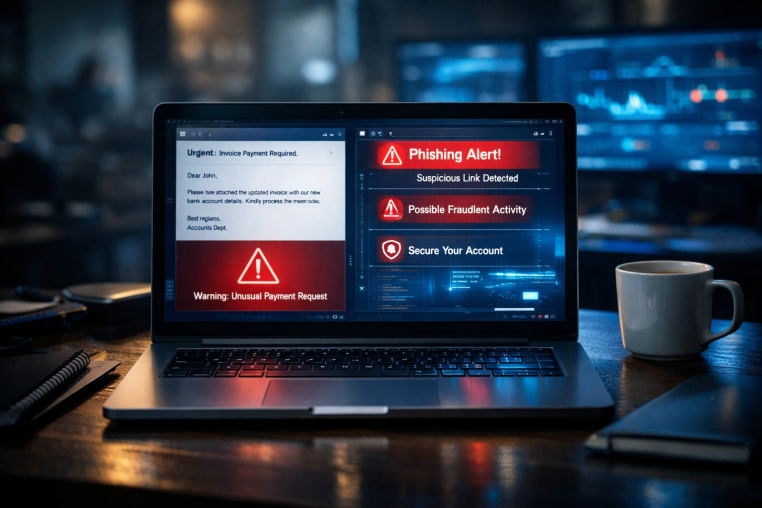
3. Fake Invoices and Payment Requests
One of the most common AI phishing scams targeting SMBs involves fake invoice fraud.
Here’s what happens.
An employee receives an email that appears to come from:
• a vendor
• a contractor
• an internal executive
The message asks for:
• a payment update
• a wire transfer
• updated banking details
The email looks authentic.
The language is professional.
The request seems routine.
But the payment goes straight to a criminal account.
This type of scam is often called Business Email Compromise (BEC), and it costs businesses billions every year.
4. AI Voice Cloning Scams
This is where things get even more concerning.
Some attackers now use AI to clone a person’s voice.
A criminal might call an employee pretending to be the CEO or owner and say something like:
“Hey, I’m in a meeting right now. I need you to send a quick payment to this vendor. I’ll explain later.”
The voice can sound shockingly real.
And if the employee recognizes the voice, they may act quickly without questioning the request.
For small businesses with fast decision-making processes, this kind of pressure can lead to mistakes.
Real-World Example
Let’s look at a scenario I see often.
A small construction company receives an email from what appears to be a regular supplier.
The email says:
“We’ve updated our payment details. Please use the new bank information for upcoming invoices.”
The email includes:
• the supplier’s name
• correct branding
• professional formatting
• a friendly message
What the business doesn’t realize is that attackers compromised the supplier’s email account weeks earlier.
They watched previous conversations and used AI to craft messages that match the supplier’s communication style.
When the company sends payment, the money goes directly to the attacker.
By the time the mistake is discovered, the funds are usually gone.
And for many SMBs, a loss like that can be devastating.
How SMBs Can Protect Themselves
The good news is that you don’t need enterprise-level cybersecurity tools to reduce your risk.
What you do need is awareness, process, and a few key protections.
Let’s talk about the most important ones.
Practical Steps
1. Train Employees to Recognize Phishing
Your employees are your first line of defense.
Make sure your team understands:
• what phishing looks like
• how attackers create urgency
• Why unusual payment requests should be verified
Even basic training dramatically reduces successful attacks.
2. Require Verification for Payment Changes
This is one of the simplest and most effective policies a small business can implement.
Never process:
• payment changes
• wire transfers
• banking updates
based solely on email.
Instead, verify the request using a known phone number or secondary contact method.
This one rule alone can stop many scams.
3. Use Multi-Factor Authentication (MFA)
Email account compromise is one of the main entry points for attackers.
Enabling multi-factor authentication (MFA) on your email accounts adds a powerful layer of protection.
Even if someone steals a password, they still can’t access the account without the second authentication step.
4. Implement Email Security Filtering
Modern email security tools can detect:
• suspicious links
• spoofed domains
• malicious attachments
Even basic filtering can significantly reduce phishing emails reaching your team.
5. Create Clear Financial Approval Processes
Many successful scams happen because attackers exploit informal approval workflows.
Create clear rules for:
• payment approvals
• vendor updates
• financial requests
When employees know the process, they’re less likely to act on unusual instructions.
6. Encourage a “Pause and Verify” Culture
One of the biggest advantages attackers use is urgency.
They pressure employees to act quickly.
Teach your team that it’s always okay to slow down and verify requests.
A simple five-minute verification step can prevent a major financial loss.
Final Thoughts
AI is changing the cybersecurity landscape in ways that many small businesses aren’t fully prepared for yet.
Phishing scams used to be easy to spot.
Today, AI-generated messages can look professional, personalized, and legitimate.
And because small businesses often operate with faster decision-making and smaller teams, they can become prime targets.
The good news is that protecting your business doesn’t require complicated technology.
Most successful defenses come down to:
• employee awareness
• verification processes
• stronger email security
• clear financial policies
If you’re running a small business, this is one area where a little preparation can prevent a very expensive mistake.
AI Phishing Scams Target Small Businesses