 Written by
 For years, small businesses have focused on SEO (Search Engine Optimization) to get their websites ranking on Google.
But recently, another term has started popping up in marketing conversations:
AEO (Answer Engine Optimization).
If you’re running a small business, you’re probably wondering: “Is this just another marketing buzzword… or something I actually need to care about?”
Here’s the thing: most small businesses don’t realize that search itself is changing.
People are no longer just typing keywords into Google and scrolling through websites. They’re asking questions to AI tools, voice assistants, and search engines that try to give the answer immediately.
And that shift is where AEO comes in.
Let me break this down simply.
What Is SEO?
SEO (Search Engine Optimization) is the practice of optimizing your website so it ranks higher in search engine results.
Traditional SEO focuses on things like:
• keywords
• backlinks
• website speed
• content optimization
• local search listings
• technical website structure
The goal is simple:
Get your website to appear on page one of Google when someone searches for something related to your business.
For example:
A plumber might try to rank for:
• emergency plumber near me
• water heater repair Los Angeles
• how to fix a leaking pipe
When someone searches those terms, SEO helps your website appear in the results.
For the last 20 years, this has been the foundation of digital visibility. But search behavior is evolving.
What Is AEO?
AEO (Answer Engine Optimization) focuses on optimizing your content so that AI systems and search engines can directly use your information to answer questions.
Instead of just ranking on a results page, the goal is to be the source of the answer.
This includes platforms like:
• AI search tools
• voice assistants
• Google’s featured snippets
• AI-generated search summaries
• smart assistants in apps and devices
For example, someone might ask:
“How often should a restaurant clean grease traps?”
Instead of showing ten links, an AI system might generate a direct answer and cite a source.
If your content is optimized correctly, your business can become that source.
That’s AEO.
Why This Matters for SMBs
Here’s the shift that’s happening right now. More people are searching like this:
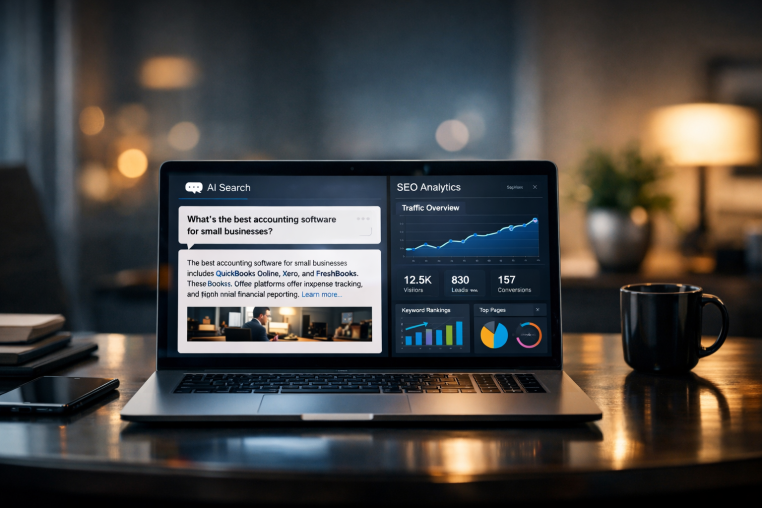
• “What’s the best accounting software for small businesses?”
• “How much does roof repair cost in California?”
• “How do I secure my business email from hackers?”
They’re asking questions, not just typing keywords.
Search engines and AI systems now try to answer those questions immediately.
That means:
Traditional SEO alone isn’t enough anymore. Small businesses that adapt early will gain a huge advantage because:
• fewer competitors are optimizing for answers
• AI tools prefer clear, structured content
• trusted sources get cited repeatedly
And once an AI system trusts a source, it tends to reuse that source often.
That creates powerful long-term visibility.
SEO vs AEO (Simple Breakdown)
| SEO | AEO |
|---|---|
| Focus on ranking pages | Focus on answering questions |
| Keyword optimization | Question-based content |
| Website traffic | Information authority |
| Search result listings | AI answers and snippets |
| Google results pages | AI tools, voice assistants, and search summaries |
The key thing to understand:
AEO does not replace SEO.
It builds on it.
Good SEO helps search engines find your content.
A good AEO helps AI systems use your content.
The Risk Explained
Many small businesses are about to run into a new problem:
AI search reduces clicks.
If Google or an AI assistant answers the question directly, the user may never visit the website.
That sounds scary at first. But here’s the opportunity most businesses miss.
If your business becomes the trusted source behind those answers, you gain:
• brand authority
• visibility across multiple AI systems
• higher trust from customers
• more qualified traffic
People may still click when they want deeper information. And when they do, they’ll already see you as the expert.
Real-World Example
Let’s say you own a local HVAC company.
Traditional SEO content might look like:
“HVAC Services in Los Angeles”
But AEO content might look like:
• “How often should you replace HVAC air filters?”
• “Why is my AC blowing warm air?”
• “How much does AC repair cost in California?”
These are question-driven topics that AI systems love.
When written clearly, these answers can appear in:
• AI search summaries
• voice assistant responses
• featured snippets
• AI chat responses
Instead of competing only for rankings, you’re competing to own the answer.
How Can SMBs Start Using AEO?
The good news?
You don’t need advanced technology to start.
You just need to adjust how you create content.
Here are the key principles.
1. Focus on Questions
Think about what your customers ask every day.
Examples:
• “How much does this cost?”
• “How long does this take?”
• “How do I fix this problem?”
• “What’s the difference between these options?”
These are high-value AEO opportunities.
2. Write Clear, Direct Answers
AI systems prefer content that is:
• simple
• structured
• factual
• easy to summarize
Instead of long paragraphs, write answers like:
Question: How often should a restaurant clean grease traps?
Answer: Most restaurants should clean grease traps every 1–3 months, depending on kitchen volume and local regulations.
Short, clear answers perform better in AI search.
3. Use Structured Headings
Organize content with headings like:
• What is it
• Why it matters
• How it works
• Step-by-step solutions
This helps search engines understand your content faster.
4. Add FAQ Sections
FAQ sections are one of the easiest AEO strategies.
Example:
Frequently Asked Questions
• How long does roof repair take?
• What causes water heater failure?
• How much does website SEO cost?
Each answer becomes a potential AI citation.
5. Build Topical Authority
AI systems trust websites that consistently publish useful content on the same subject.
If you run a:
• law firm
• dental clinic
• construction company
• cybersecurity company
• accounting firm
Publishing regular educational content builds authority over time.
That authority makes your business more likely to appear in AI answers.
Practical Steps SMBs Can Take This Month
Here’s a simple plan any small business can implement.
Step 1
Write 10 blog posts answering your most common customer questions.
Step 2
Add an FAQ section to your website.
Step 3
Use clear headings and simple explanations.
Step 4
Create content around “how-to” questions.
Step 5
Optimize for local questions like:
• “How much does landscaping cost in [city]?”
• “Best marketing agency for small businesses in [city]”
These topics attract both SEO and AEO traffic.
Final Thoughts
Here’s the reality.
Search is moving from links → answers.
AI tools are becoming the new interface for information.
For small businesses, that means visibility will increasingly depend on:
• helpful content
• clear answers
• authority in your field
SEO still matters.
But AEO is the next layer of digital visibility.
The businesses that win in the next five years won’t just rank in search results.
They’ll be the ones AI systems trust to provide the answers.
And that starts with creating content that actually helps people solve real problems.
A Note for SMB Owners
Most small businesses still focus only on keywords and rankings.
But customers increasingly search by asking questions to AI tools and voice assistants.
If your content clearly answers those questions, your business can appear everywhere those answers are delivered.
AEO vs SEO: What Small Businesses Need to Know About the Future of Search